How to Reheat Fish and Chips So They're Actually Crispy
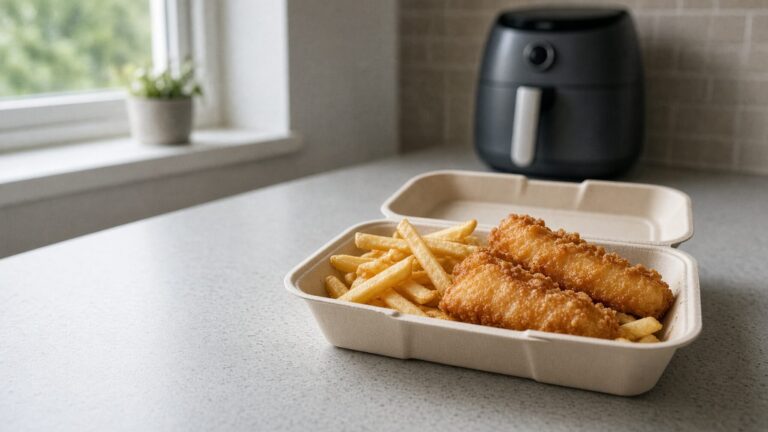
Let’s start with the bad news: reheated fish and chips will never be as good as fresh. Nothing will. The whole point of a chippy is that the batter goes from fryer to paper to you in the space of a few minutes, and once that window closes, you can’t fully reopen it.
The good news is that most people reheat it so badly that they’ve never found out how good it can be. If your method involves a microwave, you’re about to eat much better leftovers.
Why the microwave ruins it
A microwave heats food by exciting the water molecules inside it. That’s efficient, and it’s why it’s brilliant for soup and terrible for anything crisp.
Batter is crisp because it’s dry. Microwaving drives moisture from the fish out into the batter, so what was crunchy becomes soggy and slightly chewy. Chips get the same treatment — the fluffy inside turns gluey and the crisp edge disappears entirely.
Two minutes in the microwave undoes everything the fryer did. Don’t do it.
The air fryer method (best)
If you own an air fryer, this is the answer and you can stop reading.
- Take the fish and chips out of the fridge 15 minutes early. Cold food straight from the fridge heats unevenly — the outside burns before the middle warms.
- Preheat the air fryer to 180°C for three minutes.
- Chips first, in a single layer. Don’t pile them up. Five to six minutes, shaking the basket halfway.
- Fish for the last four minutes, skin side down, next to the chips or on a second layer. Don’t add oil — there’s plenty in the batter already.
- Check at four minutes. The batter should sound hollow when you tap it.
The air fryer works because it moves hot dry air fast across the surface, driving moisture back out of the batter. It’s the closest thing to re-frying without the mess.
The oven method (nearly as good)
No air fryer? A conventional oven does a proper job, it just takes longer.
- Preheat to 200°C — higher than you think. A low oven steams food rather than crisping it.
- Use a wire rack over a baking tray. This is the step people skip and it’s the one that matters most. On a flat tray, the underside sits in its own steam and goes soft. On a rack, air circulates underneath.
- Chips in first, spread out. Eight to ten minutes.
- Add the fish for the final six to seven minutes.
- Don’t cover with foil. Foil traps steam. Steam is the enemy.
Total time: around fifteen minutes. Worth every one of them.
The frying pan method (for chips only)
If it’s just chips, a dry frying pan on a medium-high heat works surprisingly well. No oil needed. Spread them in a single layer, leave them alone for two minutes, turn, another two minutes. They’ll come back crisper than the oven manages.
This doesn’t work for battered fish — the batter sticks and tears. Fish needs surrounding heat, not contact heat.
How to store it in the first place
What you do in the first ten minutes matters more than the reheating.
- Let it cool before it goes in the fridge. Hot food in a sealed container creates steam, and steam is what makes batter soggy overnight.
- Don’t seal it tight. Leave the container lid slightly ajar, or cover loosely with foil rather than clingfilm.
- Keep fish and chips separate if you can. The fish releases moisture that the chips absorb.
- Eat it within 24 hours, and make sure it’s piping hot right through when you reheat — standard food safety, no different from any other leftover.
Can you freeze fish and chips?
You can, but manage your expectations. Battered fish freezes reasonably well — wrap it individually, use within a month, and reheat from frozen in the oven at 180°C for about 20 minutes.
Chips freeze badly. The potato structure breaks down and they come back mealy. If you’ve got chips left over, eat them tomorrow rather than freezing them.
The honest advice
Order what you’ll eat. Our regular portions are generous, and a large cod with large chips defeats most people. If you’re one person, a regular portion with regular chips is usually plenty — and you’ll enjoy it more fresh than you ever will reheated.
But if you do end up with leftovers, now you know what to do with them.